
Why I’ve kept a tab on Subvert.fm for two years:


*****Subvert.fm is my preferred platform for fans to go to for listening! All of my music is there. You can find it as the first button on my Hyperlink Turnpike. Most of my music will be on other platforms still, but if you can, please listen on Subvert! 🌐******
Table of Contents:
• What the Heck Even is Subvert.fm?
• What Makes it Different (and awesomer) Than Bandcamp?
• Adventures As a Founding Member
• Why Choose Subvert for Listening?
• What’s in Store?
• Finishing Thoughts
• My Artist Page
• Further Reading
| In
late September 2024, a mysterious link slipped into my iPhone messages. Tap-happy, I clicked and was bounced to “Subvert.fm,” strapline: “A collectively owned Bandcamp successor.” If you don’t know, the second bit of that motto refers to Bandcamp’s forfeiture first to Epic Games in 2022, then to music-licensing marketplace Songtradr in 2023, recounting BC’s fall from grace.1 Like many others, I was bummed to hear about the acquisitions url amidst the landslide of indignation over staff layoffs during the pandemic, especially as the deal dealt a blow to Bandcamp’s capacity as an asylum for independent musicians against label-fraught chokeholds and the inequity of music streaming at large.
On the double, the arrival of the Subvert link was well-timed, as I had recently self-distributed my single “Ghosts Are All Gone” across DSPs and was wondering whether there would be any alternatives out there for a more authentic ecosystem of discovery. So, curious what it was all about, I opted in to receive email dispatches from the co-op, and after a couple of weeks, got this:


What the Heck Even is Subvert.fm?
Further than its mission statement to become “the next-gen Bandcamp,” Subvert can be described as an artist-owned, democratically-governed, online music marketplace startup and platform cooperative. Explaining what that means in greater detail takes something like a 134-page zine. If that sounds interesting or you’re like, “no problem, I eat manifestos for breakfast,” I recommend perusing Subvert’s ambitious Plan for the Aritst-Owned Internet, designed by founder/owner/worker-member Austin Robey, or checking out their more succinct About page/FAQ as a resource to grasp Subvert’s goals on the whole.
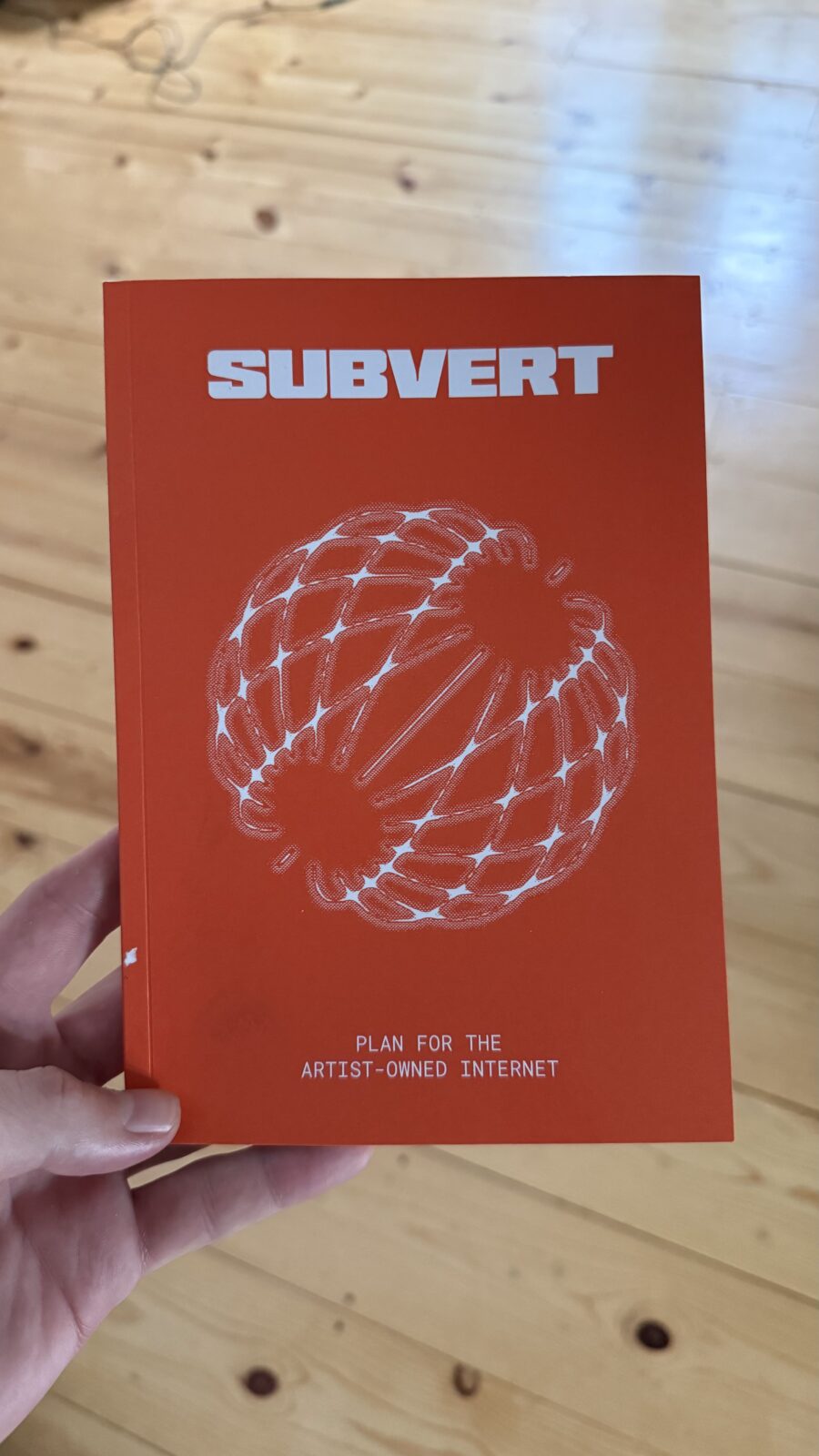
-While these points are outlined at length in The Plan^, to accelerate the learning curve, here are some of my key takeaways on what distinguishes Subvert from a technical, political, and conceptual point of view.
>The Technical:
According to the zine, the initial stages and strategy of development for Subvert (from a startup standpoint) are reserved for emulating Bandcamp’s technical infrastructure and UI to attract new users during earlier phases. For now, in principle, Subvert functions effectively the same as BC: upload your music, update your metadata, customize your page, etc.2
Ideally, however, once the platform reaches a certain scale of security, visibility, and viability, this “lookalike” phase and the intersection between the two begins to dissolve, giving way to a new cosmetics and unique set of tools and features. In the meantime, this helps position Subvert as BC’s largest marketplace competitor, at least until it clears a few more milestones on the blazing trail to ‘subverting’ ye-old Bandcamp.
>The Political:
By “political,” I don’t mean the sort of macro, geonational politics on the news, but a very microcosm-scale governance setup specifically tailored to Subvert. To elaborate, one of the core distinctions between Subvert and Bandcamp is the answer to the question, “who owns the platform?” For Bandcamp, and for that matter, many other platforms that meet a similar fate, the response is usually rooted in private equity. No doubt, the enshittification of such platforms is in large part due to structures that permit profit-driven incentives to inevitably corrupt their utility in bigger and bigger buyouts with no say from the users who are affected.
For Subvert and its flavor of platform cooperativisim,3 the answer is that all classes of membership, including artists, labels, and supporters, are equal owners and shareholders in the company, marking a collective effort of resilience to help protect against, if not purge, the problem of platform decay. For example, in July 2025, Subvert turned down $200,000 in VC4 because the investor asked for a seat on the election board (HUGE 🚩). In remaining financially transparent and rooted in cooperativist principles, SV spun a full 180° from PE platforms, where most deals are done under the table and which tend to end up screwing over the userbase.
Further to its credit, via democratic polls and board elections, each member of Subvert is given a voice to vote on the direction that the co-op takes as it grows, including major decisions on matters of finance, development, or policy, and more importantly, accountability whenever mistakes are made. For more info on how governance works on Subvert, jump in here.
Side note—in recent decades, the world has already witnessed the emergence of several successful large-scale LCAs. For one, Tertulia, a online book retailer co-owned by readers, has been going steady since 2022. I’m not a member there, but my experience buying books on Tertulia has been smooth af, and they’re competitively-priced, too. It has quickly become a go-to site for stuff local brick-and-mortars don’t carry—take my word for it, I worked in a bookstore!5 Another example is in Spain, which is home to the world’s longest-standing successful irl cooperative, Mondragon.6 The founder of Subvert even visited there and took notes.
>The Conceptual:
Part of what has kept Bandcamp running all these years (and why it was upsetting when it sold out) is that it provides independent or unsigned artists with a legitimate, streamlined venue for connecting with their audience, acting as a de facto newsletter and virtual storefront for direct patronage, and helping stoke music culture in editorials and events through the likes of BC Daily and BC Friday,7 both of which have declined in quality after the Songtradr restructuring. In stark contrast to the highly-bottlenecked, inequitable streaming giants many elect for listening, BC seems to offer a breath of fresh air, something genuinely pro-artist and not pro-rata for once.
At face value, this sounds like a sweet deal, and yet…it’s not the best that it can be. Ever since it was turned over to the idle hands of venture capitalists, community feedback on Bandcamp has been met with a brickwall; now, significant moves are increasingly informed by the motives of outside investors without any input from the artists, let alone the staff. To a greater extent, this plays out like layoffs, outsourced support, microtransactions, and feature creep.
Conversely, on Subvert, unfettered flexibility of community feedback is not only permitted, but encouraged, enabling a much higher ceiling of potential for development. Not to mention no ads, no bloat, no ‘premiums’ or ‘pros,’ no platform fees at checkout (board vote),8 no AI sludge (policy drafted by member input), and crucially, no platform decay: clean and simple.


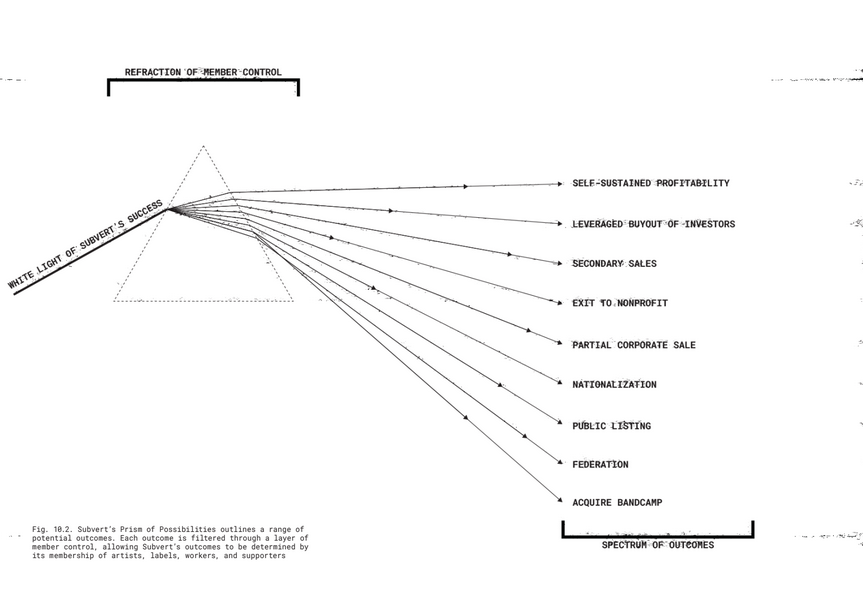
Plus, Subvert can expand on things that Bandcamp was genuinely doing well. To sample some of the forum chatter, stuff like radio discovery, audience interaction, Bandcamp Friday every day, enhanced listening parties, songwriting contests, and location-based discovery aren’t a far shot away. One of my favorite pages of the zine is a diagram of SV’s “Prism of Possibilities” (pg. 112), a blueprint for speculating where the co-op could end up in the future, ranging from the grander longterm (i.e. irl venue spaces) to the more practical short-term (i.e. personally-curated editorials). It’s as if, once anchored against the possibility of enshittification, all other possibilities become real.

Adventures as a Founding Member:
To join as an artist or a label is free. In addition to being able to create a page on the platform, one of the benefits for founding members (and any new member) is access to Subvert’s Discourse-based community forum space, where you can interface with all the normal forum-y stuff like starting threads, DM’ing other users/members, and earning badges. It also acts as a virtual town hall for the kind governing activity mentioned above.
Arriving early to the party, I was pleased to note a presence of hundreds of like-minded musicians across the planet already introducing themselves, sharing various attachments, lobbying thoughts, floating perspectives, personalities, and ideas in discussion posts, or just generally lurking about on the forum. At the time of this log, a day ahead of the platform’s official release on May 12th, that figure has ballooned to ~20,000 members internationally.

Over the past two years, I have (literally) kept a tab on Subvert. As it aligns with many of my interests, it became a routine habit to catch up on daily discussions from other members and casually track new developments on the forum. Thankfully, in contrast to all the doomscroll outrage spawn of the modern internet, I find the forum to be full of authentic and friendly folk who share similar yet diverse interests in music and a willingness to articulate their own ideas. On the whole, it serves as a rewilded virtual ecosystem for bonding over knowledge and experience regarding the global state of music.9
>Discoveries:
-From my time so far as a member of the co-op, a surplus of gems have crossed my radar: music, crafts, connections, opportunities, ideas, hardware, software, radio, and other cool resources. Here is a soft bulletin of some of my favorite digs:
• Freakscene.diy: an artist-member10 on the forum linked this website. Freakscene is a free underground networking resource for all walks of craft, organized geographically by “scenes.” For example, there is a scene for Milwaukee, which has been instrumental for me in finding other local musicians interested in setting up shows. My sets with Moscow Puzzles and Bearjaws were both made possible by freakscene.
• Vinyl: Subvert holds promise for forming connections between artists across state lines and international meridians. One anecdotal proof-of-concept is how I discovered Philly-based Consonant Collective, a DIY record-cutting outfit who hooked me up with my first-ever batch of wax: a limited release of 5 easy dems on 8″ vinyl, which I showed off in this post:

• Soma.fm: a commercial-free human-curated radio station with old-school internet vibes. Groove Salad and Groove Salad Classic have become my prefered plugs for IDM, lo-fi beats, downtempo techno, and electronica treats—RIYL stuff like Boards of Canada, Nightmares on Wax, and Emancipator. There are other tags too, so if you’re into non-algorithmic modes of music discovery, I definitely recommend exploring soma.fm.
• Livestreamers: It’s always nice to find fellow artists exploring the world of music livestreaming. Two Twitch streamers I met on SV worth checking out are ScottHsuMusic (singer-songwriter) and The Killer Bee Relay Team (modular/techno).
• Radio: I’ve landed my music on two radios I discovered through Subvert: Radio Artifact is regionally-based in Cincinatti but friendly to online submissions, and Mitxoda.be is a French indie music broadcast where submissions are personally curated for a recurring weekly podcast.
• Mood Machine: a thread on the forum was made for sharing reading material, typically books and articles related to historical or recent developments in the music industry. I learned a great deal by picking up Mood Machine, published in 2025 by Liz Pelly, which uncovers the underbelly of Spotify and the past decade of music streaming. Even if you’re not a musician, it can be quite insightful into what goes down behind the veil of pro-rata algorithms.
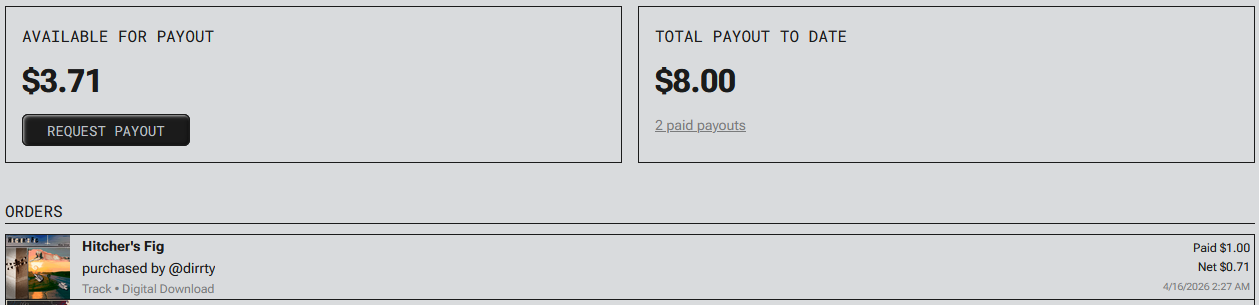
• Earnings: although monetary benefits should always come second to the art, I am forever in favor of hard-working musicians having a way to be fairly compensated directly by an audience who truly values their work. Digital marketplaces like Bandcamp and now Subvert enable this kind of autonomy, emphasizing that direct patronage to artists from actual appreciators is a real demand that can be met in a practical way. To illustrate, here’s a screenshot of how Stripe payouts on Subvert look on an artist’s account:
• Music: there are plenty of great musicians and bands with pages set up already. When it takes off, I’ll be able to share a collection or two from some cool music I’ve found!
• /now page: the concept of a /now page11 was introduced to me on Subvert. I liked it enough to put it on (In)Sitze!
• Soundghost Scatter: tips and deals are always floating around the forum. One piece of software that has made it into my streaming rig is this real-time granular VST3 which adds a nice shimmery-space layers over the sound.
Why Choose Subvert for Listening?
Nowadays, there is an overwhelmening number of various online venues to choose from when it comes listening to music. And if you already pay for an Apple Music or Spotify subscription, why should you hit skip on streaming in favor of tuning in on Subvert.fm? Of course, it doesn’t need to be reduced to one or the other, but maybe outlining some benefits of listening on Subvert as opposed to other platforms can help inform your decision about how to best support musicians in the modern era.
>Quality playback:
Similar to Bandcamp, Subvert features lossless, un-normalized streaming. Unlike other popular platforms, which tend to use lossy compression for quicker queues and enable normalization by default for setting levels to a standard loudness between songs, Subvert respects the original quality of the work, unadulterated by compression or normalization, so you can stream and download it exactly how it was made to sound by the artist.
>Collections:
Very much like the concept of playlists on streaming platforms, you can build your own personalized collection of tracks, albums, and artists! What’s more, you can customize them with little annotations, adding a banner image, and sharing with others. It’s a neat tool for discovery, and that’s just the tip of the iceberg, as there is much more planned for having fun with collections in the future (buying something on someone else’s wishlist, for example.)
>An ethical alternative:
It’s not my intention to guilt trip readers or convince you about what is “ethical” in any liberal, patronizing sort of way. If you get your music from streaming DSPs, no judgment—you can definitely use both, and where you listen isn’t a huge deal in the grand scheme. If, however, you like to be mindful about the way you consume music, it is to the best of benefit, between fans, musicians, and the platform, when you choose Subvert. For artists, SV extends a great deal of control and transparency for uploading and promoting work; for fans, it provides an opportunity for directly supporting artists you enjoy as well as discovering more marginal music without any subscription or extra compulsory fees; and the platform itself gains by voluntary contributions and continuing to accomodate artists’ requests/needs. For these reasons and more, Subvert exists as the most ethical digital marketplace for music and best value for all parties involved.
>Vs. streaming:
Over the past decade, Spotify and Apple Music have slowly stole the show for access to music, offering a Babel-esque catalogue with so many juicy impulse features that almost anything else less-convenient feels regressive by comparison. It also tends to reshape one’s relationship to music listening, arguably in a detrimental way. One of my first articles on (In)Sitze examines the way in which music streaming has altered my listening habits since I started using Spotify in college—perhaps you can relate? Anyway, it eventually led me to adopt my own discovery system, described more in the article About My Roundabout Music-Listening M.O. Bottom line, even though I still use Apple Music for a lot of stuff as a listener, Subvert is gradually becoming my preferred means for cultivating a healthier relationship to music listening.
>Greater freedom of expression:
Because platforms are the gatekeepers of modern music distribution, and gatekeepers have rules, some music is censored/stricken from certain streaming platforms, while on others there is almost no filter. Subvert, on the other hand, offers an open and diverse canvass of expression for artists that stops short only of AI and extremism. That means more radical forms of expression, as opposed to “safer” kinds of playlist-pandering beats can find their home here. Allowing bolder colors to splash the online scene can help artists mobilize more than just their music but their causes as well.
>Transparency:
One of Subvert’s flagship tenets is their call to transparency. Besides alerting users to financial decisions like the rejection of outside investment, SV also invites the public to view for themselves what’s under the hood in terms of development, as seen by their roadmap page. In an age of closely-guarded protocols and surreptitious algorithms, the co-op operates as an open kitchen, so there’s much less stress of suspicion concerning where the platform is headed.
>How to join:
To become a co-owner of Subvert as a supporter, artist, or label member, follow the link here.
There’s a lot to be excited about with building a platform like Subvert; the prospects beam out in near-quixotic abandon. Although there is no stock for trade in this LCA, I feel good to put stock into the platform as a go-to digital storefront for promoting my music.
>How do I intend to use Subvert moving ahead?
Because I joined as a founding member (before public launch), I had the benefit of preparing an artist page, so once SV goes live on May 12th, it will already offer my full catalogue from Bandcamp and Soundcloud.
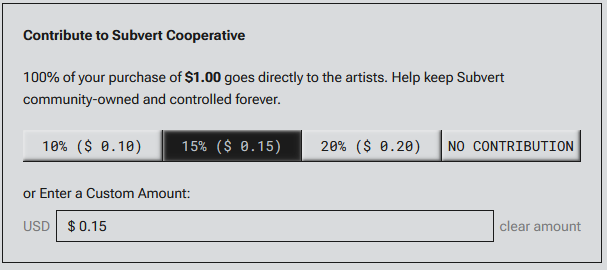
**The price of my songs is discounted on Subvert. Some tracks are even free for members. I did that in the hopes that it encourages people to buy from the co-op instead of Bandcamp and over time, establishes itself as my main storefront. And with the money you saved, you might like to support the platform at checkout, which would also be dope!**
**the fotoplayer jams, which I have been uploading to Bandcamp and Soundcloud, will soon find their home on a dedicated artist page on Subvert. Since their uploading process is already miles ahead of BC, the two places you’ll be able to stream the audio prints in the future (besides directly in the YouTube VOD) will be on Subvert and Soundcloud. I plan to utilize “collections” to arrange some of my personal favorite jams from the past year with written annotations: stay tuned for “fotoplayer footnotes“!
-Subvert offers exclusives—songs you can’t find on any other platform. Your next favorite track might be one of them!
>As a store:
One of Bandcamp’s better one-ups on streaming is that it can act as an online storefront for selling physical merch like vinyl, CDs, shirts, stickers, and other fun stuff, in addition to digital downloads. When Subvert catches up to that feature, I intend to make it my all-in-one store for merch. I’ve already done homemade CDs, fotoplayer stickers, and vinyl, so when you do your music-related shopping, go to my Subvert page (linked below)!
One of the things I find most interesting about Subvert’s ethos is how it frames its opposition beyond the marketplace and conducts it around the fabric of humanity itself. For example, throughout the zine, “cynicism,” not necessarily Bandcamp or other competing online music platforms, is referenced as a core, common threat to success. Granted, it’s a bit abstract to be competing with what comes down to an internal attitude toward the world, but it’s true; the corrosive force of cynicism is where we (members) need to be the most wary about coming apart before getting the chance to stick around.
And, in a collective comprised of very independent-minded, unique individuals, fatigued and frustrated by the systematic failures of related enterprises, volunteering to leave your weapons at the door in good faith is a monumental challenge, especially now on a worldwide web where suspicion reigns as the capital mindset. At the same time, setting down skepticism to build trust and transparency is a large part of what makes the prospect of Subvert so refreshing, novel, and exciting. For decades, the narrative of the music industry has revolved around various conflicts, e.g., label vs. artist, analogue vs. digital, venues vs. PROs, platforms vs. enshittification, and so on. Even so, the splitshot mechanisms from such historical divisions have consequently (and justifiably) recoiled into a cyclone of cynicism on behalf of the exploited, becoming a large part of their ethical ‘defense against the dark arts.’ While that may have sufficed in some fractional improvements over the years, pointing pitchforks at the oppressor only functions within the context of such hierarchical dichotomies. On the other hand, it would be nonsensical and ineffective to point pitchforks at each other, yet smarter to use them to till the grounds and cultivate a longterm support system for all walks of musicianship. In my mind, this external-internal flip of affairs is what makes the platform a true “subversion.”
No matter the outcome, it’s been cool these past couple years watching the platform and people on the platform gather together, let alone being able to participate in the praxis of such a high-hanging theory. It is that sense of being a part of something larger than myself on an equal plane with others, seeding something from the ground up, executing an experiment with the potential for seminal results. I hesitate to use the term “revolutionary” and deliberately dodge Marxist vernacular not because I’m leery about what the platform can achieve or where it draws inspiration from, but because they are perhaps a hyperbolic and misguided sense of what is truly being “subverted,” and employing them may result in a certain backfiring effect, in the cyclical way that many historical “revolutions” tend to take. While there may be a future where Subvert is regarded that way, for now, the co-op is like a hip boutique carrying the promise of beans worth more than gold. Let it grow, I say!
~Sincerely Ours
- Bandcamp’s acquisition covered by Rolling Stone magazine ↩︎
- There are a couple of other differences like batch/lossy uploads, bio links, and lyrics tabs ↩︎
- Platform cooperatives (wiki) ↩︎
- “Why we turned down $200,000” ↩︎
- I worked at Books on First! ↩︎
- Mondragon website ↩︎
- Pitchfork article ↩︎
- “Announcing 0% Platform Fees” ↩︎
- Subvert Hotline ↩︎
- Full Catholic ↩︎
- What is a /now page? ↩︎
Thanks for reading! You can opt in for further blog updates from (In)Sitze by subscribing to the Newsletter below.

This is great, Alex. Thanks for the heads up and breakdown of the site. I’ll follow you there!
Awesome, thank you!